
“`html
How to Introduce Hydroponics into Home Gardening
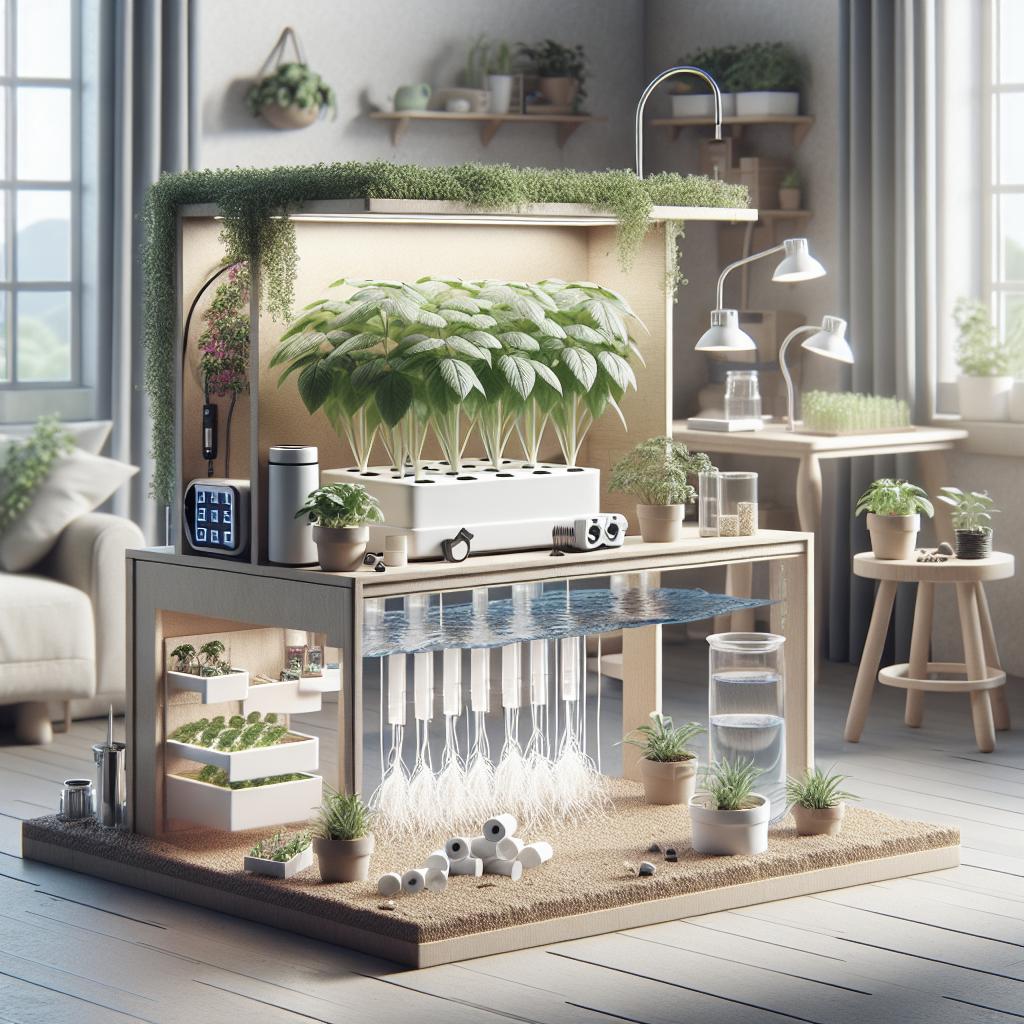
As traditional gardening meets modern innovation, hydroponics has emerged as a forward-thinking alternative, enabling gardening enthusiasts to grow plants without soil. This method involves immersing the plant roots in nutrient-rich water, facilitating an efficient, controlled environment for growth. This blog post explores three prominent hydroponic systems suitable for home use, the importance of nutrient solutions, and what the future holds for this sustainable gardening technique. For hobbyists eager to enhance their understanding and maximize their home gardening potential, this exploration offers the foundational knowledge needed to get started with hydroponics.
System 1: Wick System
The Wick System is one of the simplest and most accessible forms of hydroponics, making it ideal for beginners. This passive system doesn’t require pumps or electricity, functioning on the basic principle of capillary action. As such, water and nutrient solutions are drawn up a wick, reaching the plant roots. It’s a cost-effective option for those looking to start small or experiment with hydroponics without investing heavily.
While extremely user-friendly, the Wick System does have its limitations. It is best suited for smaller plants and herbs as it struggles to efficiently nourish larger ones due to its passive nature. Additionally, watching out for salt build-up in the soil is critical as it can hinder plant growth. Despite these limitations, the Wick System remains an attractive choice for apartment dwellers and urban gardeners with space constraints.
System 2: Nutrient Film Technique (NFT)
The Nutrient Film Technique, or NFT, represents a more sophisticated approach to hydroponics, widely adopted by both hobbyists and commercial growers. In this system, a shallow stream of nutrient-rich water continuously flows over the plant roots. The slight tilt in the system ensures that nutrients are evenly distributed and excess water returns to the reservoir for recycling.
NFT is particularly advantageous for fast-growing plants with small root systems, such as lettuce and leafy greens. However, while efficient and low-maintenance once set up, it requires a reliable pump to ensure continuous water flow and an understanding of water chemistry to prevent nutrient imbalances. For those ready to invest time in mastering its intricacies, NFT offers a productive means of growing plants hydroponically.
System 3: Deep Water Culture (DWC)
Deep Water Culture, or DWC, is a straightforward and effective hydroponic system favored for its scalability and ease of use. Plants are suspended in a nutrient solution, bolstered by an air pump to provide oxygen to the roots. This setup encourages robust growth and minimal maintenance compared to other methods.
DWC is particularly well-suited for home gardeners aiming to cultivate large plants like tomatoes and cucumbers. The continuous immersion in nutrient solution ensures that plants have unlimited access to nutrition, promoting healthy and fast growth. While initial setup requires attention to detail, particularly with aeration levels, the ongoing management is considerably less labor-intensive, making DWC an ideal choice for both novices and experienced growers alike.
Nutrient Solutions
The cornerstone of successful hydroponic gardening lies in crafting the perfect nutrient solutions. These solutions must be meticulously balanced, containing macro and micronutrients critical for plant health. Pre-mixed solutions are available for beginners, offering a straightforward option without the complexities of tailoring nutrients to specific plants.
For more experienced growers, custom blends allow for fine-tuning to maximize growth and adapt to different plant species. Monitoring pH and electrical conductivity is essential in maintaining nutrient solutions, ensuring that plants assimilate nutrients efficiently. As technology evolves, smart solutions and automated nutrient management systems are likely to become more prevalent, enhancing precision and convenience in home hydroponics.
Future Prospects
With increasing interest in sustainable home gardening, hydroponics is poised for widespread adoption. As technology advances, hydroponic systems are becoming more user-friendly, affordable, and efficient, making them accessible to a broader audience. This evolution promises to enhance food security, reduce environmental impact, and provide an engaging hobby for gardeners of all skill levels.
Encouraging innovation and community engagement, hydroponic gardening holds potential not only for self-sufficiency but also for educational purposes, teaching children and adults alike about plant biology and sustainable practices. As we embrace future advancements, hydroponics stands to transform home gardening, underscoring the remarkable intersection of nature and technology.
| System | Features | Potential Limitations |
|---|---|---|
| Wick System | Passive, no electricity, ideal for small plants | Limited to small plants, risk of salt build-up |
| Nutrient Film Technique (NFT) | Continuous nutrient flow, efficient for fast-growers | Requires pump, careful nutrient monitoring needed |
| Deep Water Culture (DWC) | Scalable, robust plant growth, minimal maintenance | Requires aeration setup and monitoring |
LEAVE A REPLY.
We’d love to hear your thoughts on hydroponic home gardening! Share your experiences, ideas, or questions in the comments below. Your insights can inspire and inform fellow gardening enthusiasts embarking on their hydroponic journey.
“`
