“`html
Integrating Art into Garden Design
The art of garden design becomes truly transformative when infused with elements of artistic expression. By seamlessly weaving art into the fabric of your garden, you create a visual narrative that enhances the natural beauty of the landscape. This blog post explores six strategies for integrating art into garden design. From leading the eye with strategic placements to creating whimsical touches, each approach offers a unique way to personalize and enrich your outdoor space. Whether incorporating historical elements or playing with color and purpose, these techniques provide a foundation for crafting a garden that not only captivates viewers but also reflects personal style and creativity.
Lead the Eye
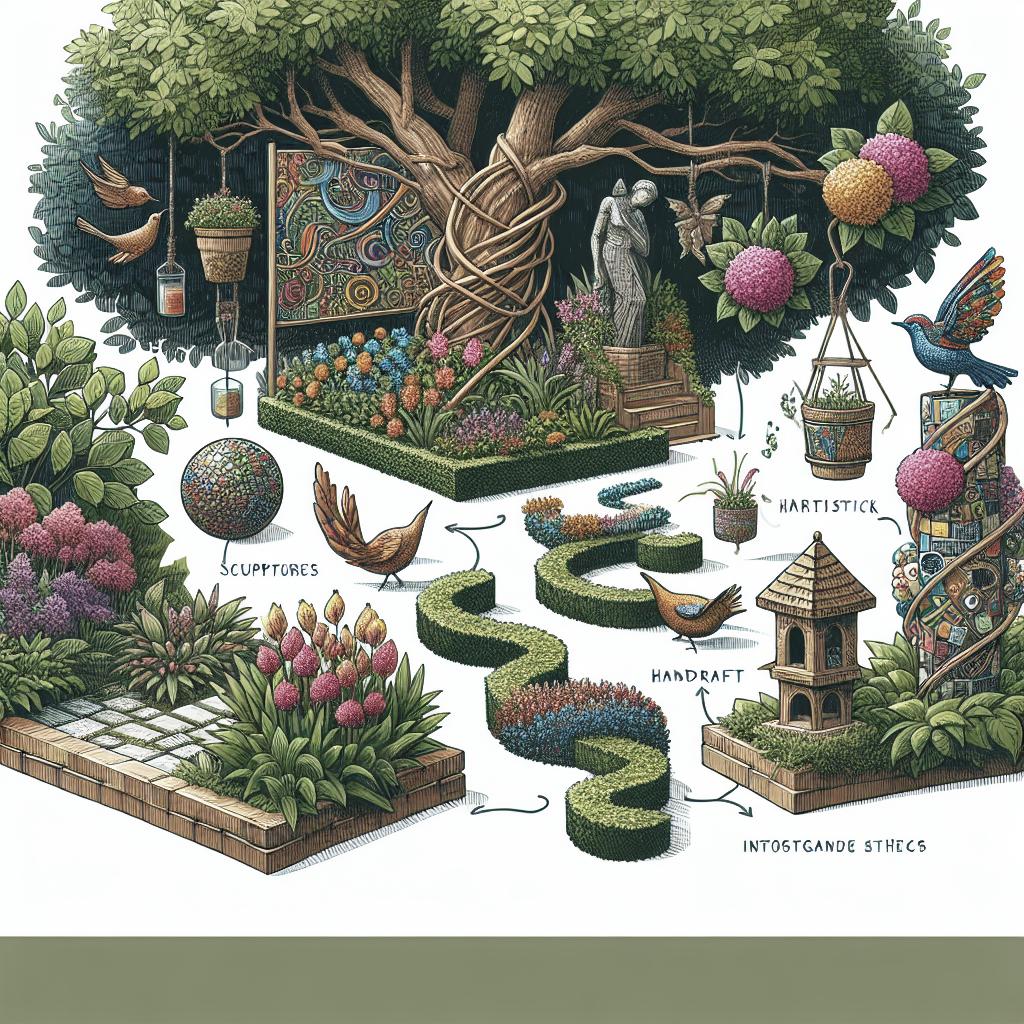
Garden design, at its core, is about guiding the viewer through a tailored experience. One effective way to achieve this is by strategically placing art pieces that lead the eye to key focal points in the space. Sculptures, for instance, can serve as compelling anchors, naturally drawing attention and encouraging exploration. By positioning these elements at various vantage points, you ensure a sense of depth and journey throughout the garden.
Pathways lined with artistic pieces can also gently guide visitors while adding an informative or playful narrative. Consider using stepping stones with intricate designs or engraved quotes that intrigue walkers and invite reflection. The idea is to create a seamless path where the art naturally punctuates the landscape without overpowering it, enhancing instead of dominating the scenery.
Create a Theme
Thematic gardens harness the power of cohesive storytelling. By selecting a central motif or concept, you can integrate various artistic elements that speak to your chosen theme. For example, a Japanese-inspired garden could feature traditional lanterns and delicate bonsai arrangements, weaving a narrative of tranquility and minimalism.
Similarly, modern-themed gardens might incorporate contemporary sculptures and geometric installations. When art is tied to a theme, it not only strengthens the garden’s aesthetic cohesion but also makes the space feel intentional and curated. Themes provide a guiding framework that simplifies decision-making and narrows artistic focus, allowing for a more streamlined design process.
Add Whimsy
Whimsy in garden design leverages the unexpected to deliver delight and surprise. Playful art elements, such as fanciful birdhouses or abstract garden gnomes, inject a sense of fun and imagination into the space. These pieces invite observers to engage with the garden on a more emotional level, sparking curiosity and joy.
Moreover, whimsical elements encourage visitors to slow down and appreciate the smaller, often overlooked details. Incorporating hidden garden figures peeking out from flower beds or a splash of vibrant color in an otherwise muted setting can effectively capture the spirit of whimsy. This approach fosters an imaginative escape, an essential aspect of a restorative garden experience.
Include the Old
Incorporating vintage and antique pieces into garden design fosters a sense of history and continuity. Old metal gates, weathered statues, or reclaimed wooden benches add character and tell a story, inviting those who visit to ponder the past lives of these objects. This infusion of nostalgia often resonates deeply, creating an emotionally rich environment.
Beyond their aesthetic value, older artifacts also offer sustainability benefits, as they breathe new life into items that might otherwise be discarded. Upcycling materials not only contributes to environmentally conscious gardening but also allows for creative expression within a historical context. Embracing the old in garden design is a celebration of time’s passage, blending memory and innovation in a harmonious narrative.
Inject Color
Color is a potent tool in both art and garden design. It has the ability to instantly alter mood and perception. Artistic pieces with vibrant hues can accentuate specific areas of a garden, creating energetic focal points or serene alcoves. Experimenting with color allows for dynamic expression and can be tailored to suit a variety of design intents, from calming pastels to invigorating primaries.
Integrating color can also be functional, such as differentiating garden zones through colored pathways or structures. Consider utilizing ceramic pots, painted fences, or colorful mosaics that reflect a broader garden palette. When thoughtfully applied, color in garden art holds the power to unify disparate elements, crafting a tapestry that resonates visually and emotionally.
Give it a Job
Art in the garden doesn’t have to be merely decorative; it can serve practical purposes too. Functional art transforms beautiful pieces into useful components of the garden, such as sculptural planters, artistic water features, or decorative trellises that host climbing plants. This dual-purpose approach elevates the garden’s functionality while maintaining its visual appeal.
Additionally, incorporating functional art promotes sustainability by ensuring that each piece serves a role beyond ornamentation. Wind chimes that double as pest deterrents or standing sculptures that also distribute light are examples of how art can transcend its traditional boundaries to offer ecological benefits. The synergy of utility and beauty in garden art emphasizes resourcefulness and creativity, crafting spaces that are as impactful as they are efficient.
Lessons Learned
| Strategy | Key Insights |
|---|---|
| Lead the Eye | Use art to guide exploration and draw attention to key focal points. |
| Create a Theme | Tie art to a central theme for cohesion and narrative strength. |
| Add Whimsy | Infuse playfulness and surprise to engage and delight visitors. |
| Include the Old | Utilize vintage pieces for history, character, and sustainability. |
| Inject Color | Use color to alter mood and connect different areas of the garden. |
| Give it a Job | Incorporate functional art to enhance both beauty and utility. |
“`